# How to Keep Your Cat Warm in Winter — A Practical Guide for Australian Cat Owners
Australia has a cold weather reputation problem.
Everyone assumes because we're known for beaches and sunshine that Australian winters are mild. And then a Melbourne morning in July hits zero degrees and you find three of your cats piled on top of each other on the heater vent like a furry, purring stack of desperation.
I have seven cats. Three of them are hairless. I have spent a lot of time thinking about how to keep cats warm in winter — not as a hobby, but as an actual daily operational requirement.
Here's everything I've learned.
---
Which cats actually feel the cold — and how much
Let's start with the most important thing: not all cats are equal when it comes to cold. Knowing where your cat sits on the spectrum helps you work out how much intervention you actually need.
Hairless breeds — highest cold sensitivity
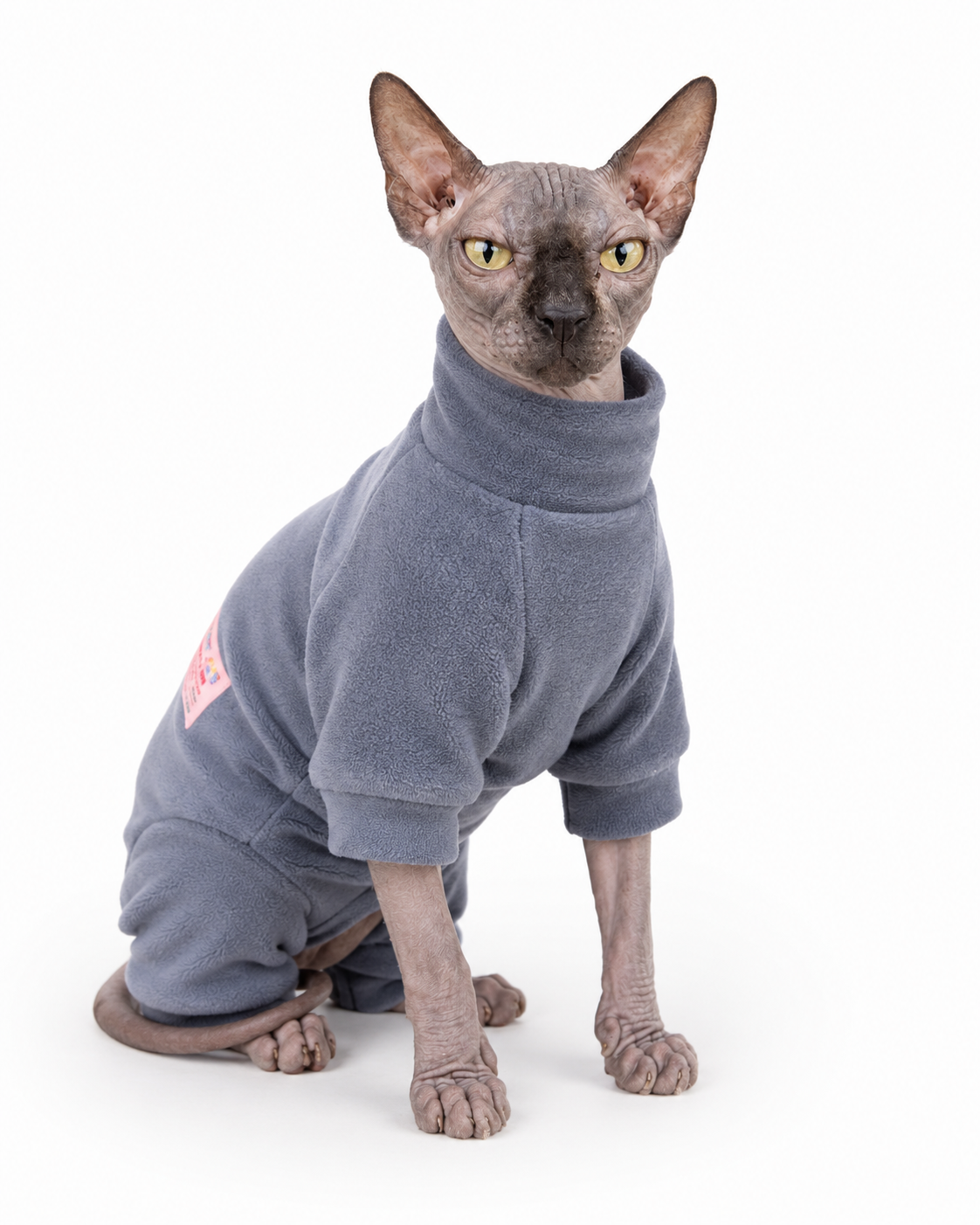
Sphynx, Devon Rex, Cornish Rex, Peterbald, Bambino — if your cat has no fur or very thin, fine fur, they have essentially no natural insulation. Their skin is exposed directly to the air. They lose body heat faster than any other type of cat and feel the cold in a way that's genuinely comparable to a person going outside in winter without a coat.
These cats don't just appreciate warmth — they need it. Three of my seven cats are in this category and they wear clothing year-round, not just in winter. Their clothes for Sphynx cats aren't an aesthetic choice — they're a comfort necessity.
Kittens — higher cold sensitivity than most people realise
Kittens of any breed regulate their body temperature less efficiently than adult cats. A kitten who seems fine in summer can genuinely struggle in winter, even if they're a fluffy domestic shorthair. If you've got a kitten — or you're fostering — pay attention. A well-fitted knit jumper for kittens can make a significant difference on cold days and nights.
Senior cats — often overlooked
Older cats lose muscle mass and body fat as they age, both of which help with temperature regulation. A 12-year-old tabby who cruised through every winter for the past decade might suddenly start seeking out the heater obsessively. It's not just age — it's that the body's ability to maintain warmth diminishes. Watch senior cats carefully through winter and be prepared to add a layer.
Short-haired cats in very cold climates
If you're in Canberra, the Blue Mountains, Tasmania, or anywhere with genuinely harsh winters, even a healthy adult domestic shorthair can benefit from a layer overnight or on particularly cold days. It's not universal — but if your short-haired cat is spending a lot of time on the heater, that's information.
Long-haired and double-coated cats
Maine Coons, Persians, Norwegian Forest Cats — these cats have genuinely excellent natural insulation and are unlikely to need clothing in most Australian winters. They're built for cold. Let them enjoy it.
---
The signs your cat is too cold
Before we talk about solutions, let's talk about reading your cat. These are the signals that tell you a cat is cold, not just comfortable:
Seeking heat compulsively. Every cat enjoys a warm spot. A cold cat is obsessive about it — sitting directly on heater vents, pressing against radiators, burrowing under blankets and not coming out.
Curling into a tight ball. Cats curl up to conserve body heat. A cat who is curled as tightly as possible — nose tucked under the tail, limbs pulled in — is trying to reduce surface area exposure.
Shivering. Obvious, but people miss it because cats can shiver subtly. Run your hand down your cat's back on a cold day and you might feel a slight tremor you wouldn't otherwise notice.
Cold ears, paws, or tail tip. Touch your cat's extremities. If they're noticeably cold compared to their body, their circulation is prioritising core warmth.
Reluctance to move from warm spots. A cat who normally roams the house but is suddenly glued to one warm location in winter is telling you something.
If you're ticking multiple boxes here, your cat needs more warmth — whether that's heating, bedding, clothing, or all three.
---
Practical solutions that actually work
Here's what I actually do across my seven cats through an Australian winter.
1. Layering starts with the right base — clothing
For my hairless cats, clothing is non-negotiable. But the principle extends. A soft knit cat sweater works as an everyday warmth layer for any cat who feels the cold. It doesn't restrict movement, it goes on easily once your cat is used to it, and it means they can roam the whole house without losing body heat in the colder rooms.
For genuinely cold days or outdoor time, a padded cat jacket goes on over the top. Think of it exactly like you'd layer yourself — base layer for warmth, outer layer for protection.
2. Overnight is the most important window
Body temperature drops during sleep. This is when cold-sensitive cats are most vulnerable. For my hairless cats, overnight in cat pyjamas is standard — a full-body onesie that provides warmth through the night without restricting how they sleep.
For cats who aren't hairless but still feel the cold, a warm, enclosed bed in a draught-free spot does the job. Position matters — if you've got a cat sleeping near a door or window, move the bed.
3. Heated beds — yes, they're worth it
A self-warming or electrically heated cat bed is genuinely one of the best winter purchases you can make for a cold-sensitive cat. Most cats who'd normally ignore a bed will suddenly claim it enthusiastically in winter.
4. Draughts are the enemy
Your heating is almost irrelevant if there's a draught running through the room. Check where your cats sleep — draught from a gap under a door or an uninsulated window can make a warm-looking room genuinely cold at ground level where your cat is sitting.
5. Don't forget the water bowl
Cats drink less in winter because they're not panting in the heat, and cold air is drying. Dehydration compounds cold stress. Keep fresh water accessible and consider a heated water fountain if you have a cat who goes off drinking in winter.
---
Introducing clothing to a cat who's never worn it
The number one question I get: "my cat hates being dressed, how do I get them to accept it?"
Here's my honest answer: some cats take to it immediately, some need weeks, and a small number just aren't suited to it. But most cats — especially those who genuinely feel the cold — adapt quickly once they associate the garment with warmth.
Start with the lightest, softest option. A thin cotton onesie is far less confronting than a padded jacket. The less the cat has to process, the faster they accept it.
Let them investigate it first. Leave the garment in their sleeping area for a day before you try to put it on. Let them sniff it, sit on it, decide it's not a threat.
Keep early sessions short and positive. On → treat → off → repeat. Five minutes, three times a day, for a week. Then extend.
Use the correct sizing. A lot of cat clothing rejection is actually a fit problem. If the garment is pulling across the chest, sitting awkwardly, or bunching around the neck, the cat is uncomfortable — not resistant. Use the sizing guide and measure properly before ordering.
---
The bottom line
Australian winters are underestimated — especially for cold-sensitive cats. Hairless breeds, kittens, senior cats, and thin-coated cats genuinely need extra warmth and there's no shame in providing it.
Clothing isn't dressing your cat up. It's making sure they're comfortable through the coldest months of the year.
Browse the full cat sweater and jumper range to find the right layer for your cat's winter — and if you're new here, sign up to our list and get 10% off your first order.
Your cat's winter wardrobe starts at nudiecats.com.au.
*Letisha — nudiecats co-founder, owner of seven cats (three of whom have made peace with jumpers, and four of whom are smug about their fur)*
A few useful cat accessories to explore
These products are pulled from the current NudieCats catalogue. Check each product page for its current price, details and availability.